


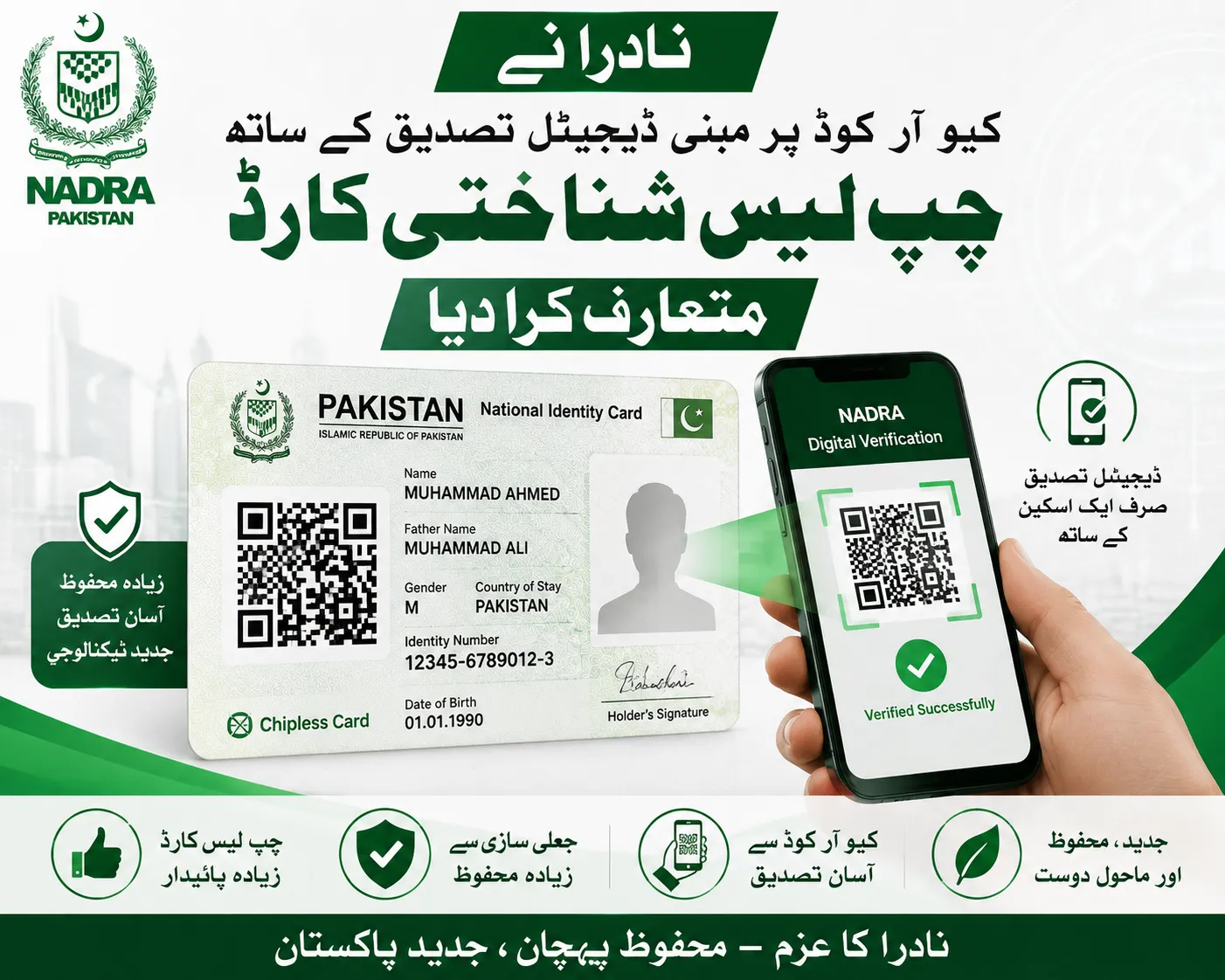
The National Database and Registration Authority (NADRA) has begun issuing a new generation of chip less CNIC with a secure QR code that does not require microchips as Pakistan has been using smart national identity card (CNIC) for many years.
The new identity card aims to make digital verification of citizens’ identities faster and more convenient for all authorized entities to use the Pak ID mobile app to verify citizens’ information via a smartphone.
The gradual implementation of the new system of CNIC format will start from August 14, 2026, and will be implemented gradually starting from 2027.
How the New QR-Based CNIC Works
A secure QR code is provided on the new CNIC, which could be scanned with compatible devices and smartphones.
Authorised institutions will be able to digitally verify relevant information about the cardholder via the QR code and PakID application. The information contains the citizen’s image and other identification information.
It is hoped the system will enable organizations to feed information like name and address straight into their computer-based systems, minimizing manual data entry errors.
No Specialized Chip Readers Required
One of the significant alterations is the elimination of microchip in the Smart CNIC.
NADRA noted that the old system was based on chips and had its problems due to a lack of reader equipment that could detect the chip and necessary infrastructure in organizations.
QR-based system is designed to solve this problem by providing a way to verify it using devices that are much more widely used these days.
Organizations to Receive QR Verification Software
Software will be available for use by a variety of approved entities that will be able to read and check the new QR code.
These organisations include:
- Banks
- Telecom operators
- Hospitals
- Pakistan Railways
- Police
- Other authorised institutions
The system may improve the ease of verification in cases where organizations want to verify citizens’ information.
New Security Features
“The new card has been equipped with the latest visible and covert security features as per the latest security requirements and standards,” said NADRA.
The printing and security specifications are as per NADRA and cards are being produced locally by National Security Printing Company, Karachi.
On 23rd February 2026, the federal government gave approval for the issuance of a new identity card format.
Information Displayed on the New CNIC
The new card will still have vital identity details with new visual markers added.
It will display:
- Family number
- Citizen’s name in Urdu and English
- Address in Urdu and English
- Photograph
- Relevant identification details
- Symbols for persons with disabilities
- Senior citizen symbol
- Organ donor symbol
- Symbol for citizens of Azad Jammu and Kashmir
Symbols for persons with disabilities will be provided. Symbols for persons with disabilities will be available.
Rollout Will Take Place in Phases
NADRA is implementing the new identity card system gradually.
August 14, 2026
The first phase of its rollout will be the replacement of the regular National Identity Card with the QR code-based chip less card.
January 2027
The new format will be extended to additional identity documents, including:
- National Identity Card for Overseas Pakistanis (NICOP)
- Juvenile Cards
Final Phase
The Pakistan Origin Card (POC) will also eventually transition to the chip less QR-based format.
The launch of the chip less CNIC by NADRA, along with QR-based digital verification, is a major shift in Pakistan’s identity documentation process.
The new card has been enhanced with an updated security mechanism, verification using smart phones via PakID, and minimum dependency on specific chip reading device. This will be implemented in the normal CNICs and will gradually be extended to NICOP, Juvenile Cards and then POC.
The new QR code-based CNIC is being phased in across Pakistan for citizens with existing CNICs, who can continue to use their old CNICs until they expire.
