


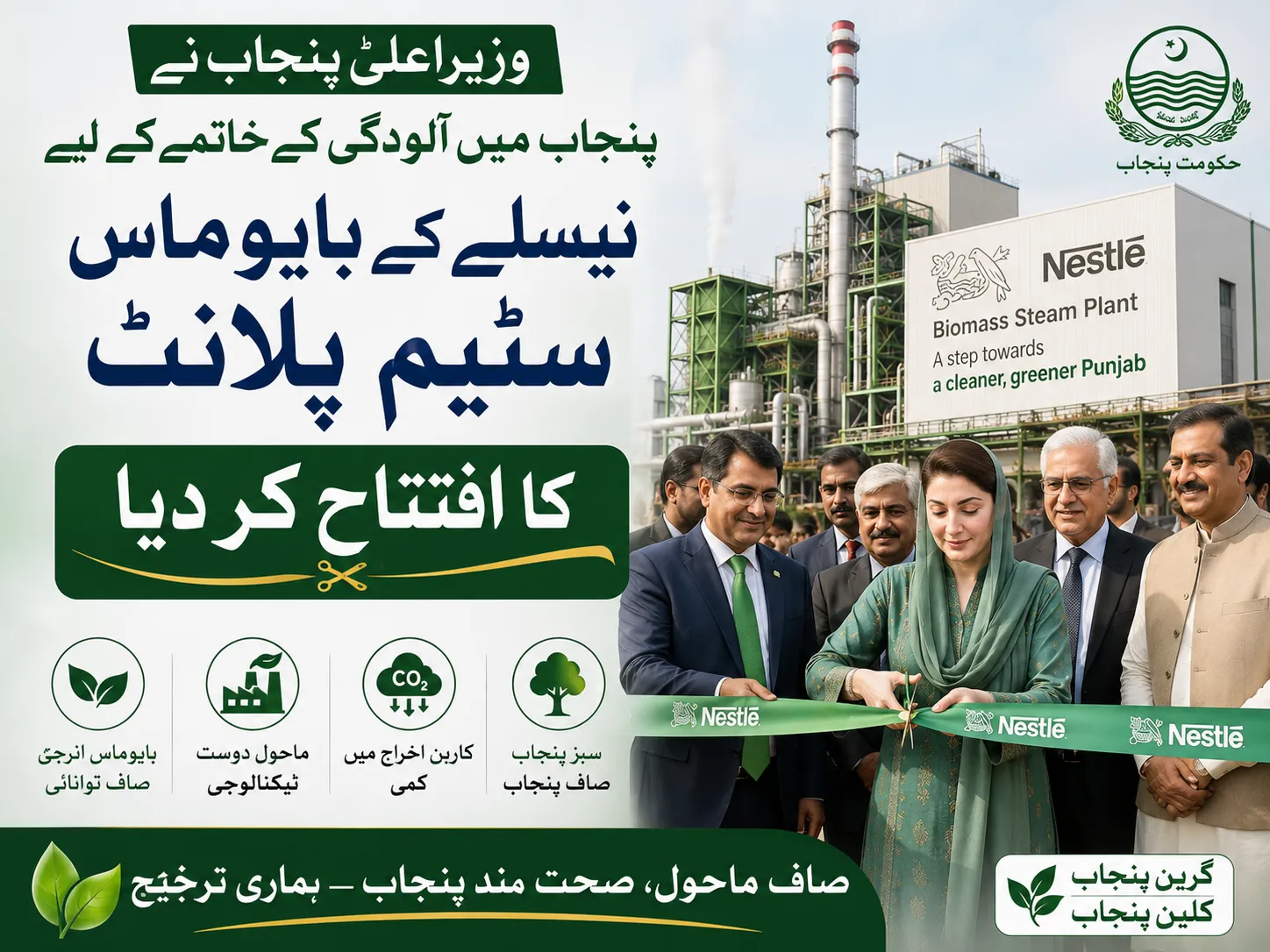
Punjab Chief Minister Maryam Nawaz Sharif, while addressing the opening ceremony, opened the doors of the cutting-edge biomass steam plant in Sheikhupura, a project by Nestlé Pakistan, through a digital platform, where he stated that it was a significant stride towards environmental sustainability, renewable energy and development of a circular economy.
The biomass steam plant has been set up with an investment of about USD 4.5 million and will utilize approximately 72,000 tonnes of agricultural residues per year as fuel. The aim of the initiative is to offer an alternative to the open burning of crop residue that is a major source of air pollution.
Plant to Generate 30 Tonnes of Steam Per Hour
It will produce approximately 30 tonnes of steam per hour, according to officials. It is expected to save approximately $2.15 million in annual fuel costs while helping the company shift toward more sustainable energy sources.
The project is also expected to cut CO₂ emissions by almost 24,345 tonnes per year. The use of agricultural waste as fuel will curb the burning of crop residues and help to enhance air quality in the region.
Maryam Nawaz Highlights Environmental Benefits
At the inauguration ceremony, the chief minister was informed about the working of Nestlé Pakistan and its efforts towards environmental sustainability.
The biomass initiative underscored the country’s progression toward adopting renewable energy and circular-economy approaches, Maryam Nawaz said, citing the company’s positive impact on the country’s industrial and environmental landscapes.
The project was in line with the priorities of the Punjab government on environmental protection, cleaner air and sustainable industrial development, she added.
Punjab Government to Support Green Initiatives
The chief minister reiterated his commitment to the provincial government to extend the support for climate-friendly projects and organizations towards green development.
She indicated that projects like the biomass steam plant can be crucial for addressing climate issues, pollution and more sustainable industrial activities.
The project also emphasizes on the potential of agricultural waste as a renewable source of energy and demonstrates an environmentally friendly approach to solve the burning of crop residues issue throughout Punjab.
