


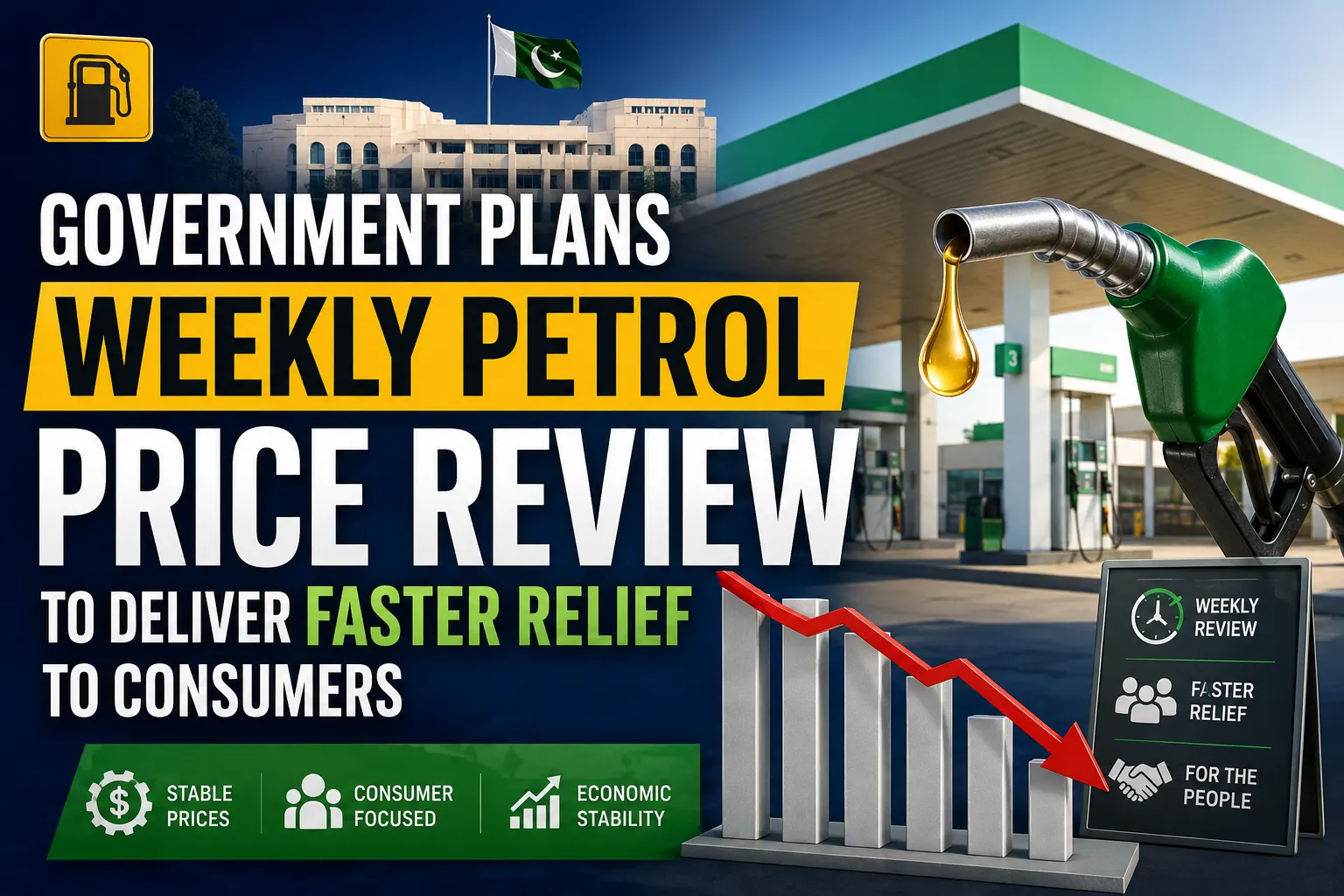
The federal government is mulling a new weekly pricing system for petroleum products that would help ensure more rapid transmission of lower oil market prices to consumers. The plan is a part of the ongoing efforts to implement more responsive, transparent and market-oriented pricing policies for fuel in Pakistan.
Prime Minister Shehbaz Sharif has instructed the relevant authorities to make sure that the reduction in the price of crude oil in the international market is translated into a reduction in the price of consumers’ oil, said the petroleum minister Ali Pervaiz Malik. If adopted, the new mechanism might be used in place of the existing pricing mode, and will be subject to more regular reviews.
Why Is the Government Planning Weekly Petrol Price Reviews?
At present, the price of petroleum products is adjusted on a regular basis and this can cause delays in the realisation of the benefits of lower global oil prices by domestic consumers. To overcome this, the proposed weekly review mechanism is for fuel prices to be adjusted more frequently.
The new system would mean a decline in crude oil prices in the international market might be seen in the local petrol and diesel prices much earlier. This would make it easier for consumers, transport operators and businesses to control costs associated with fuel.
A swift review mechanism may help to make the market more reactive and adapt to international developments more closely.
International Oil Prices Have Declined
One of the major factors behind the proposal is the recent decrease in global crude oil prices. International crude prices are at their lowest in almost three months, due to a drop in oil prices, says Petroleum Minister Ali Pervaiz Malik.
Lower crude oil prices provide governments with opportunities to offer relief to consumers. Exchange rates, taxes, transportation costs, and other factors do, however affect domestic fuel prices.
Government is looking at how to make sure a more positive adjustment in international markets is passed on in a timely fashion to consumers.
How Petrol Prices Are Determined in Pakistan
In Pakistan, petrol and diesel prices are affected by a number of factors. The proposed mechanism seeks to increase transparency and understanding of these factors to the public.
Key components involved in fuel pricing include:
- International crude oil prices
- Import and freight costs
- Exchange rate fluctuations
- Petroleum levy and taxes
- Refining charges
- Distribution and marketing expenses
More transparency in the price process could help to build more trust among the public and alleviate uncertainty of price changes.
Stakeholder Consultations Underway
The Petroleum Division is anticipated to finalise the framework in consultation with relevant institutions and stakeholders from the government.
The goal is to create a pricing mechanism to meet the needs of the consumer, while at the same time considering the market realities and ensuring that fluctuations in international oil prices are efficiently translated into domestic prices.
What Could Weekly Petrol Price Reviews Mean for Consumers?
If implemented, the weekly pricing mechanism could provide several benefits:
Faster Relief from Falling Oil Prices
Consumers may experience quicker reductions in petrol and diesel prices when international crude oil prices decline.
Better Price Transparency
Regularly reviewing prices will make people more aware of the factors affecting fuel prices and why they change.
Improved Market Responsiveness
The dynamic pricing system would enable Pakistan’s crude oil prices to remain more in sync with the global market fluctuations.
Reduced Delay in Price Adjustments
The price differential from international markets and domestic revisions could be reduced, thus bringing some relief sooner.
The government’s move to make weekly price changes in petrol is an attempt to modernise Pakistan’s petroleum pricing mechanism and increase transparency. The authorities are trying to pass the fuel price increases to the consumers, so that they can enjoy better international prices, but without putting them in the queue for too long.
The proposal is still under consultation and the mechanism hasn’t been finalized, but it does indicate the government’s attempts to offer timely relief on fuel prices and boost the public’s confidence in future adjustments.
